
Using AI-Powered Personalization Software

Jennifer Olson
November 26, 2025The luxury industry has always been about one thing: making customers feel uniquely understood and special. For years, that was done mainly through human touch—expert sales associates, private appointments, and bespoke services. Today, artificial intelligence is giving brands new ways to deliver that same sense of exclusivity at scale.
AI-powered personalization software is helping luxury houses know their customers better, predict their needs, and create experiences that feel tailored, not generic. Done right, it doesn’t replace the human touch; it supports it.
Here’s how AI-powered personalization is changing the luxury industry, where it works best, and what brands need to watch out for.
Why personalization matters even more in luxury
Luxury customers don’t just buy products. They buy stories, status, craftsmanship, and a feeling of being seen.
Some key expectations in luxury:
- Highly tailored recommendations
- Consistent recognition across all touchpoints (store, online, app, events)
- Smooth, discreet service that anticipates needs
- Experiences that feel exclusive, not mass-market
Traditional personalization relied on sales associates’ memory and notes: “She prefers gold hardware,” “He shops mostly before business trips,” etc. That still matters. But with customers engaging across websites, apps, social media, and physical stores, it’s almost impossible to maintain a complete picture without technology.
AI-powered personalization software connects all of these data points and helps brands respond in real time.
What AI-powered personalization software actually does
At its core, AI personalization software gathers data, learns patterns, and uses those patterns to tailor experiences. In luxury, that typically includes:
- Customer profile building:
- Purchase history across all channels
- Browsing behavior on website and app
- Event attendance and clienteling notes
- Style preferences, sizes, and favorite collections
- Real-time recommendations:
- Product suggestions based on what similar high-value clients buy
- Complementary items (e.g., suggesting a matching belt or jewelry)
- Personalized content (editorials, lookbooks, styling guides)
- Dynamic content and offers:
- Homepage and email banners that adapt to each client
- Personalized invitations to private sales, previews, or events
- Tailored messaging based on location, climate, and lifestyle
- Clienteling support:
- AI-driven tools that suggest which clients to contact and when
- Suggested talking points or items based on past interactions
- Smart reminders around anniversaries, birthdays, and key dates
The goal is simple: make every interaction feel like it was designed specifically for that customer, whether it’s a push notification or an in-store appointment.
Key use cases in the luxury industry
AI-powered personalization shows up in many parts of the luxury experience:
a) Online shopping that feels like a private appointment
On luxury sites, AI can:
- Adjust the homepage to show the most relevant categories (e.g., ready-to-wear vs. leather goods)
- Highlight limited editions or capsule collections that match the client’s taste
- Use visual similarity search (“More like this”) to help customers find pieces aligned with their style
This makes online browsing feel less like scrolling a catalog and more like a curated selection.
b) Hyper-personalized emails and messages
Instead of sending the same newsletter to everyone, AI helps luxury beauty brands and other categories:
- Segment customers by behavior and value
- Time messages to when each person is most likely to open and buy
- Feature products in the right color, size, or price range per client
For a high-value client, that might mean an email saying, “We just received a new version of the bag you loved last season,” with exactly the color and material they typically choose.
c) AI-boosted clienteling in boutiques
Luxury sales associates are still central. AI simply makes them better equipped.
Clienteling tools can:
- Show an associate a full history of the client as they walk into the store
- Suggest products that complement previous purchases
- Alert staff when a top client is nearby (if opted in via app and location services)
- Recommend follow-up messages after a visit
This lets associates offer a smooth, thoughtful experience: “Last time you mentioned traveling to Milan. We just received a new carry-on that I think you’ll love.”
d) Personalized after-sales care and services
Luxury is more than the purchase. AI can:
- Predict when a client might need maintenance, refills (for beauty and fragrance), or repairs
- Trigger reminders for services: cleaning, re-sizing, refurbishing
- Suggest upgrades or limited editions related to past purchases
This extends the relationship beyond one transaction and reinforces brand loyalty.
e) Smart in-store and omnichannel experiences
AI connects offline and online behavior:
- If a client tries on a watch in-store but doesn’t buy, the system can later recommend similar models online
- An app can remember in-store preferences and offer styling suggestions at home
- Interactive mirrors or displays can show looks based on the items a client brings into the fitting room
Customers experience one brand, not separate online and offline worlds.
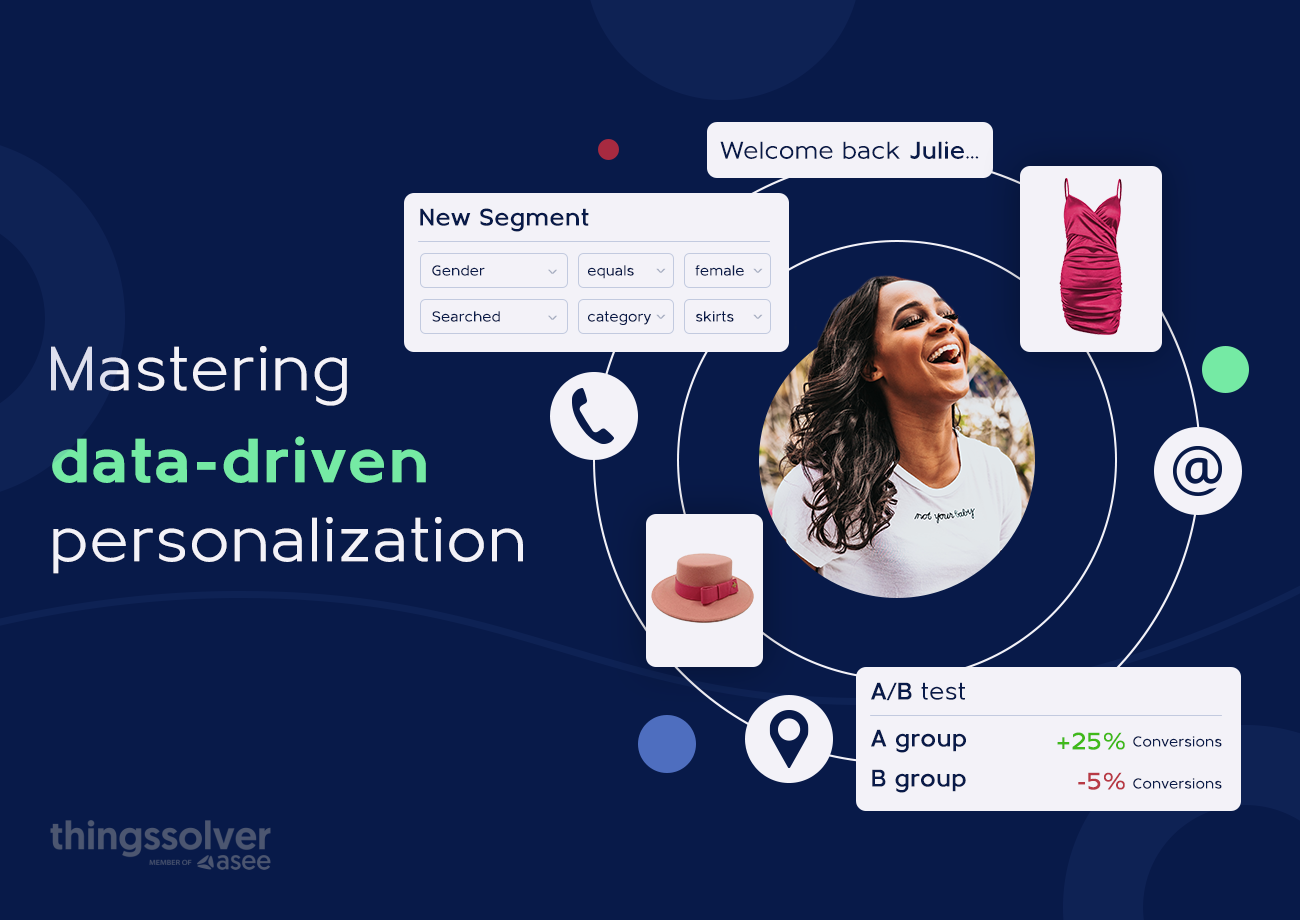
The data behind personalization
AI is only as good as the data it learns from. For luxury, that typically includes:
- Transaction data: what, when, where, how much
- Behavioral data: clicks, searches, wishlists, time spent on certain items
- Engagement data: email opens, campaign responses, event attendance
- Context data (where allowed and appropriate): location, device, language, climate
However, luxury customers are sensitive to privacy. That leads to one of the biggest challenges.
Balancing personalization with privacy and discretion
The same people who expect personalized service also expect discretion. Luxury brands need to be extremely careful with how they use data and how obvious the personalization feels.
Best practices include:
- Be transparent: clearly explain what data is collected and why
- Offer control: let clients choose communication channels, frequency, and data preferences
- Avoid creepiness: don’t reference overly specific behavior in messages (“We saw you looked at this item 17 times” is too much)
- Secure everything: invest in strong data protection and governance
The goal is to make the client feel understood, not watched.
How AI supports, not replaces, human touch
One fear in luxury is that technology will make experiences feel cold. The opposite can be true if used correctly.
AI should:
- Handle the heavy lifting: pattern recognition, timing, segmentation
- Free up staff: so associates can spend more time with clients, less on admin
- Suggest, not decide: staff should still apply judgment when dealing with top clients
- Enhance creativity: marketers can test bolder ideas because AI helps optimize and refine
Think of AI as the discreet assistant in the background, making sure the right information is in the right hands at the right time.
Common mistakes luxury brands should avoid
When adopting AI-powered personalization, brands often stumble in predictable ways:
- Over-automation: Too many automated messages or recommendations can feel pushy and cheapen the brand.
- Ignoring brand storytelling: Personalization isn’t only about the right product. It’s also about the right story, visuals, and tone that reflect the brand’s heritage.
- One-size-fits-all algorithms: Luxury customers behave differently from mass-market consumers. Models need to be tuned for smaller volumes, higher average order values, and a stronger focus on long-term relationships.
- Neglecting staff training: Giving associates AI tools without proper training makes adoption slow and inconsistent. Staff should see AI as something that helps them shine, not a threat.
Steps for luxury brands to get started
For brands exploring AI-powered personalization, a sensible roadmap might look like this:
- Define the vision:
- What kind of personalized experience should the brand be known for?
- How should the experience feel: subtle, bold, ultra-high-touch?
- Audit data and systems:
- Where is customer data stored today?
- Are online, offline, and CRM data connected?
- What gaps exist in tracking?
- Start with one or two high-impact use cases:
- Personalized product recommendations on the website
- Smart clienteling for top-tier clients
- Tailored emails for key segments
- Test with a limited group:
- Focus on one market or segment first
- Measure engagement, satisfaction, and sales impact
- Gather feedback from both customers and staff
- Scale carefully:
- Broaden to more channels (app, in-store, social)
- Refine models for specific geographies or categories (e.g., watches vs. fashion)
- Continuously adjust based on performance and feedback
The future of AI personalization in luxury
Looking ahead, AI-powered personalization in luxury will likely include:
- More advanced style prediction: Systems that understand taste at a deeper level, from cuts and silhouettes to color palettes and textures.
- Virtual stylists: Chat-based or avatar-based assistants that remember your wardrobe and suggest styling for events, trips, and seasons.
- Predictive demand for limited editions: Using data to decide which clients should be invited for exclusive drops, based on their genuine interest rather than just spending power.
- Deeper integration with sustainability: Personalization that suggests repairs, resale, or restyling services to extend the life of luxury pieces.
Ultimately, the brands that win will be those that use AI not as a gimmick, but as a quiet engine behind truly thoughtful, human-centered experiences.
Conclusion
AI-powered personalization software is reshaping the luxury industry, but not by replacing what made it special. Instead, it helps brands understand their clients better, anticipate their desires, and create experiences that feel deeply personal—whether online, in-store, or somewhere in between.
The key is to keep the focus on what luxury has always been about: emotion, identity, and attention to detail. AI is just the new tool helping deliver that, more intelligently and more consistently, to every client who walks through the door or taps on the screen.
All Tags
Loading...
Loading...