
In this article
Taking time off work is sometimes necessary—whether for health, family, personal commitments, or planned vacations. A clear, professional leave application letter helps you communicate your request properly and keeps everything on record. This guide walks you through when to use a leave application letter, what to include, how to format it, and examples you can adapt for different situations.
What is a Leave Application Letter?
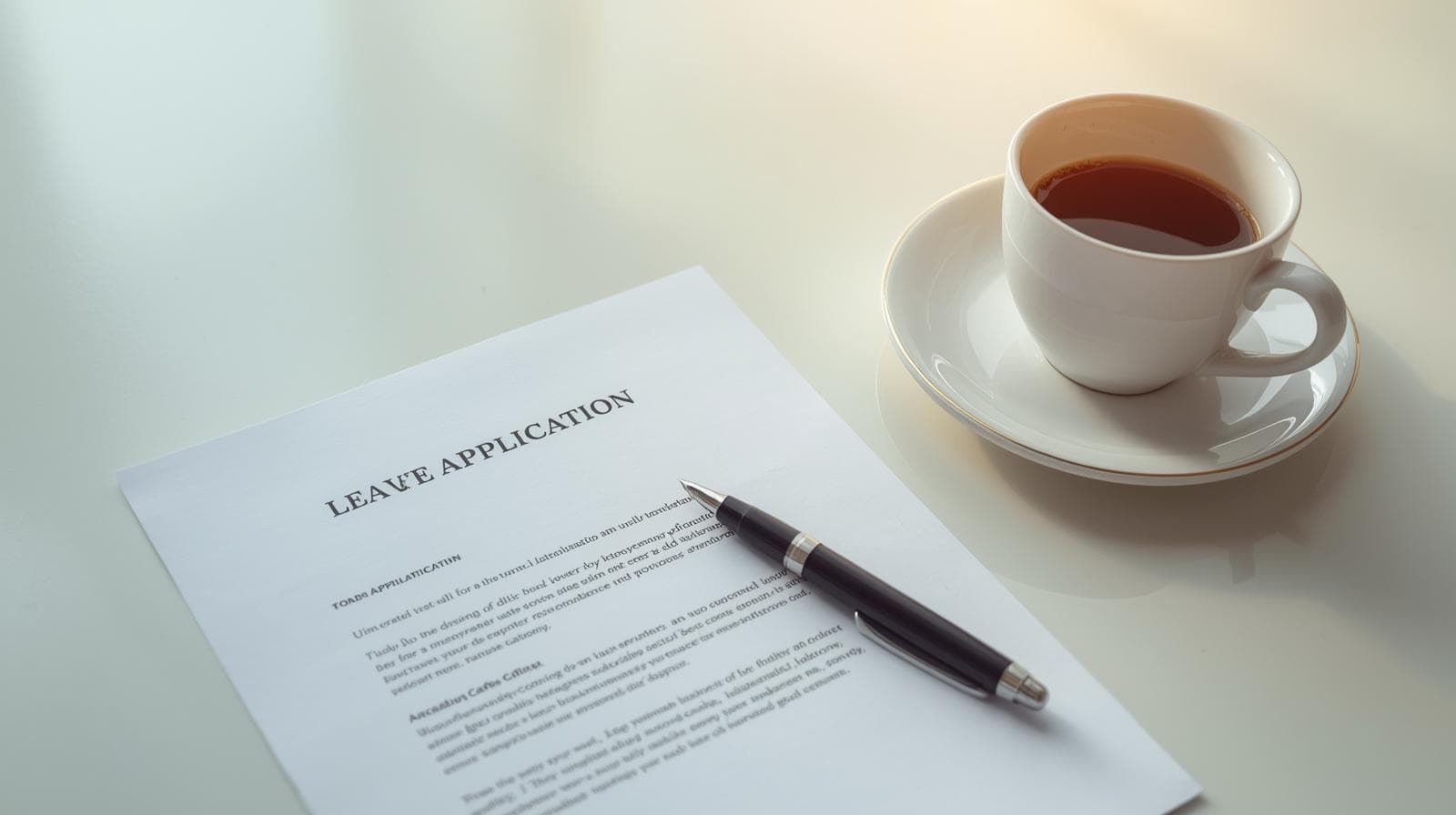
A leave application letter is a formal request to your employer or manager asking for time off from work for a specific period. It can be submitted via email or as a printed letter, depending on your company’s policy. It should be clear, concise, and respectful, giving enough detail to help your manager plan coverage while protecting your privacy where needed.
When Should You Send One?
- Planned leave: Vacations, family functions, ceremonies, exams, relocations, etc. Send as early as possible.
- Unplanned leave: Medical emergencies, urgent family matters, sudden illness. Inform your manager as soon as you can and follow up with documentation if required.
- Extended leave: Maternity/paternity leave, letter for medical leave, sabbaticals. Check HR policies, attach relevant documents, and give ample notice.
What to Include in a Leave Application Letter
- Subject line (for email)
- Keep it short and specific. Example: “Leave Application: [Your Name], [Dates]”
- Salutation
- Use a professional greeting. Example: “Dear [Manager’s Name],”
- Purpose of the letter
- Clearly state you’re requesting leave and for what reason. You don’t have to overshare—keep it appropriate and professional.
- Leave dates and duration
- Mention the start and end dates, and how many working days it covers. If you’re unsure about the exact end date (e.g., medical), specify a tentative period and note you’ll keep them informed.
- Reason for leave
- Be honest and concise. If it’s personal or confidential, you can state “due to personal reasons” or “for medical reasons,” and offer to provide documents privately to HR if needed.
- Work coverage plan
- Mention tasks you’ll complete beforehand, who will handle your responsibilities, or how you’ll ensure continuity. This builds trust and reduces friction.
- Contact and availability
- State whether you’ll be reachable and through which channels. For vacations, it’s acceptable to say you’ll have limited access.
- Attachments or references
- If required: medical certificate, travel plan, official forms, or policy references.
- Polite closing and signature
- Thank them for considering your request. Include your full name, job title, and contact information if sending a formal letter.
Formatting Tips
- Keep it to one page (or a concise email).
- Use a professional tone and simple language.
- Proofread for accuracy and typos.
- Follow company policy for leave requests, forms, and approval workflows.
- Maintain consistency with dates and names.
Common Mistakes to Avoid
- Vague dates: Always include start and end dates.
- Late notice: For planned leave, notify well in advance.
- Overexplaining: Personal details aren’t required beyond what’s necessary.
- Ignoring handover: Not mentioning coverage can delay approval.
- Casual tone: Keep it professional even if your workplace is informal.

Step-by-Step Outline to Draft Your Letter
- Check policy:
- Review your company’s leave policy to confirm eligibility, documentation, approval layers, and notice periods.
- Draft subject and greeting:
- Subject: Leave Application – [Your Name] – [Dates]
- Greeting: Dear [Manager’s Name],
- State your request:
- “I am writing to request leave from [start date] to [end date] due to [reason].”
- Provide context (optional):
- Briefly explain if needed: “This is for a scheduled medical procedure” or “I’m attending a family function.”
- Describe handover:
- “I have updated the project tracker and briefed [colleague]. I will complete [tasks] before [date].”
- Availability:
- “I will be reachable via email for urgent matters. Otherwise, I’ll have limited access.”
- Closing:
- “Thank you for your understanding. Please let me know if you need any additional information.”
- Attachments:
- “I’ve attached the medical note as required by policy.”
- Proofread and send:
- Confirm dates, names, attachments, and CC the right people (manager, HR, project lead).
Sample Templates You Can Use
1. General Leave (Email) Subject: Leave Application – Priya Sharma – 12–16 Oct
Dear Ms. Rao,
I am writing to request leave from Thursday, 12 October to Monday, 16 October (3 working days), due to personal reasons.
Also, I have updated the Q4 dashboard and scheduled the weekly report to run automatically. I have briefed Rohan on monitoring client queries during this period. I will be reachable by email for urgent issues, but I may have limited access.
Thank you for your understanding.
Best regards, Priya Sharma Senior Analyst Ext. 221 | 98765-43210
2. Sick Leave (Short Notice) Subject: Sick Leave – Today and Tomorrow
Dear Mr. Lewis,
I’m unwell and have been advised rest by my doctor. I request sick leave for today and tomorrow (9–10 May). I will share a medical certificate if needed upon my return.
Additionally, I have informed the team on Slack and moved today’s client call to Friday. For urgent matters, please reach me via phone.
Thank you for your consideration.
Sincerely, Daniel Park Account Executive
3. Medical Leave (With Documentation) Subject: Medical Leave Request – 2–20 March
Dear HR and Ms. Patel,
I am scheduled for a medical procedure and request medical leave from 2 March through 20 March (13 working days). I will submit the doctor’s note and any additional documents required by policy.
Also, I have prepared detailed handover notes for the Alpha and Gamma projects and have briefed Aisha to cover client communications. I will be unavailable during recovery but will send periodic updates.
Thank you for your support.
Kind regards, Arun Mehta Product Manager Employee ID: PM-1742
4. Vacation Leave (Planned) Subject: Annual Leave Request – 1–10 July
Dear Mr. Nguyen,
I would like to request annual leave from Monday, 1 July to Wednesday, 10 July (8 working days) for a planned vacation.
I will complete the sprint review notes and hand over open items to Linh by 27 June. Also, I will have limited email access during this period.
Please let me know if these dates work or if adjustments are needed.
Thank you, Sofia Alvarez Software Engineer
5. Emergency Leave (Family) Subject: Emergency Leave – Immediate
Dear Ms. Carter,
Due to a family emergency, I request immediate leave starting today, 14 November. I anticipate being away for three working days and will confirm the return date as soon as possible.
I have updated the shared tracker and notified the team leads. For urgent matters, please contact me by phone.
I appreciate your understanding.
Sincerely, Rahul Verma Operations Lead
6. Maternity/Paternity Leave (Extended) Subject: Maternity Leave Request – 10 Feb to 10 June
Dear HR and Ms. Ortega,
I would like to request maternity leave beginning 10 February, with an expected return on 10 June, per our company policy. I have attached the required forms and medical documentation.
Also, I have prepared a comprehensive handover of my responsibilities, including campaign roadmaps, vendor contacts, and status reports. I will be unavailable during this period and will coordinate re-entry with HR and my manager closer to the return date.
Thank you for your support.
Warm regards, Emily Chen Marketing Manager
How to Write for Different Companies and Cultures
- Startups or informal teams: Email may be shorter and more direct, but still include dates, reason, and coverage. You might also log it in the HR system (e.g., BambooHR, Workday).
- Large organizations: Follow formal templates, CC HR, attach forms, and log requests in the official portal. Use formal salutations and detailed handover notes.
- Cross-border teams: Specify time zones for dates and availability. Consider regional holidays and team workloads.
How Much Detail to Share About the Reason
- Health: “medical reasons” is usually enough, unless policy requires specifics. Share sensitive details only with HR if needed.
- Family matters: “family emergency” or “family commitment” works fine.
- Personal reasons: acceptable when specifics are private. Offer documentation only if policy requires it.
Best Practices for Smooth Approval
- Give early notice for planned leave. A month ahead is ideal for longer absences.
- Avoid critical project deadlines if possible. Offer alternative dates if your manager raises conflicts.
- Prepare a clean handover: list tasks, owners, due dates, and current status.
- Keep stakeholders informed: manager, project leads, clients (as appropriate).
- Be flexible: if workload is intense, propose splitting leave or adjusting dates.
- Keep records: save the approval email and any attachments.
Simple Handover Checklist
- Current tasks with status and due dates
- Key contacts and client updates
- Access/credentials needed by covering colleagues
- Calendar invites reassigned or canceled
- Automated reports scheduled
- Out-of-office message drafted
Out-of-Office Message Example Subject: Out of Office: Priya Sharma (12–16 Oct)
Hello,
I’m out of the office from 12–16 October with limited email access. For urgent matters, please contact Rohan (rohan@example.com). I will respond to your message after I return on 17 October.
Thank you, Priya
Quick Email Version (One Paragraph) “Dear [Manager], I’m requesting leave from [start date] to [end date] due to [reason]. I have arranged coverage with [colleague] and will complete [key tasks] before I go. I’ll be [available/limited availability] during this period. Please let me know if you need more details. Thank you, [Name].”
Final Tips
- Keep it polite and solution-focused.
- Be clear on dates, reason, and coverage.
- Follow policy and attach documents if needed.
- Communicate early for planned leave; promptly for unplanned leave.
- Save a copy of the approval.
With a straightforward structure and a thoughtful handover, your leave application letter will be easy to approve and keep work running smoothly while you’re away.