
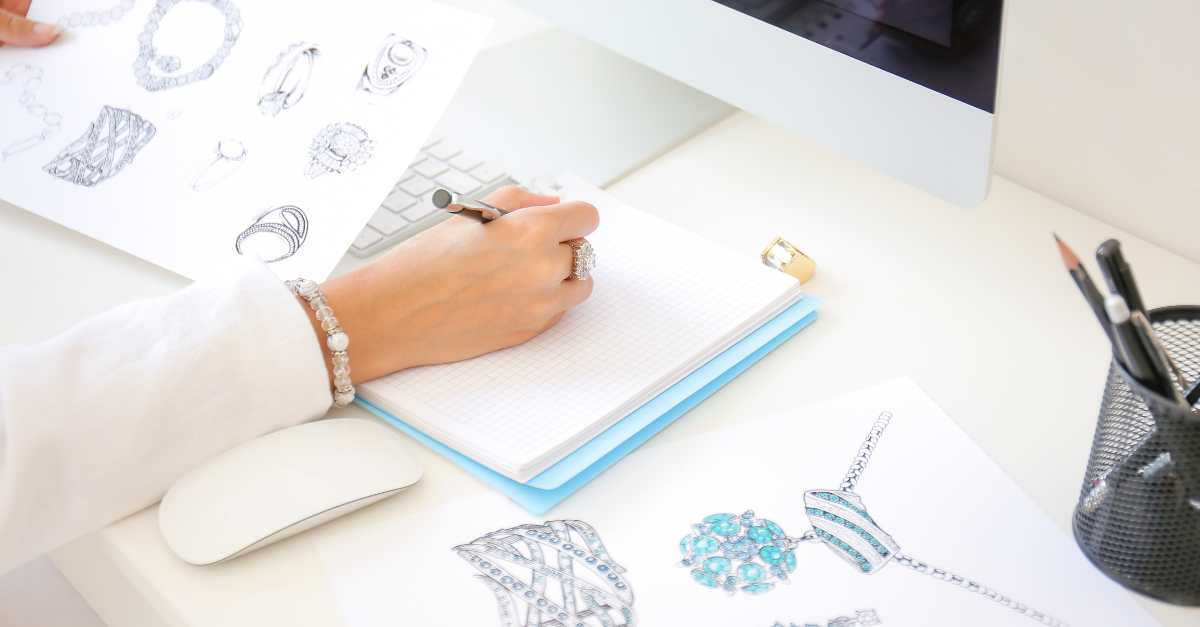
Jewellery CAD Designer Jobs in Mumbai
This guide explains what a Jewellery CAD Designer does, the software and production knowledge employers expect, how freshers can break in, and where to find roles in Mumbai.
- Jewellery and luxury retail employers hire on Mintly
- Reviewed by Mintly Talent Advisory
If you know Rhino, Matrix, or other jewellery CAD software and want to build a career in jewellery design, Mumbai is a market worth exploring. There are opportunities across jewellery manufacturers, design studios, exporters, organised jewellery businesses and newer brands.
But getting a CAD Designer job is not only about knowing the software. Employers want designers who can take a sketch, reference image or design idea and turn it into a model that can actually be manufactured. Understanding that difference can make a big difference when you start applying for jobs.
Quick Summary
Key takeaways
- A Jewellery CAD Designer must combine Rhino or Matrix skills with an understanding of jewellery manufacturing to create production-ready models.
- Freshers can get CAD jobs in Mumbai, but a varied, process-focused portfolio is essential.
- Employers look for practical modelling ability, production-aware decision making and the ability to adapt designs for stone setting, weight and finishing.
- Search beyond the title "CAD Designer": manufacturers, design studios, exporters and D2C brands hire CAD talent; Andheri and Zaveri Bazaar are active locations.
- Prepare for interviews with a clear portfolio, the ability to explain modelling choices and readiness for technical tasks.
What does a Jewellery CAD Designer do?
A Jewellery CAD Designer creates digital jewellery models that can move from the design stage into production. Depending on the company, you may receive a hand sketch, customer reference, existing jewellery piece or a basic design brief and turn it into a detailed 3D model.
The work can vary quite a bit: one day you could be working on a ring, while the next project could be an earring, pendant, bracelet or necklace. You may also need to make changes based on stone size, metal weight, setting requirements or feedback from the production team.
A good designer needs a combination of design sense, software skills and an understanding of how jewellery is actually made.
Key responsibilities
- Create detailed 3D models from sketches, reference images or briefs so they can move to production
- Model different jewellery categories: rings, earrings, pendants, bracelets and necklaces
- Modify existing designs and make corrections required for production
- Adjust models for stone size, setting requirements, metal thickness and weight optimisation
- Work with production teams to address manufacturing feedback and make design changes
Skills required
- Rhino
- Matrix
- Creating models from scratch
- Modifying existing designs for production
- Rendering skills
- Understanding of stone setting
- Knowledge of casting and 3D printing processes
- Awareness of metal thickness and weight optimisation
- Model splitting and finishing
- Basic jewellery knowledge: categories, gemstones, diamonds, gold and other metals
Categorised skills
- hard: Rhino
- hard: Matrix
- hard: 3D modelling for production
- hard: Casting and 3D printing knowledge
- hard: Stone setting and finishing techniques
- hard: Weight optimisation and model splitting
- soft: Design sense and aesthetic judgement
- soft: Ability to translate a sketch or brief into a manufacturable model
- soft: Problem solving for production issues
- soft: Ability to work with production and merchandising teams
Qualifications and hiring expectations
- Fresher: Some Mumbai openings accept freshers or candidates with limited experience
- Fresher: A strong, varied portfolio is especially important for freshers; avoid many similar practice pieces and instead show variety across rings, earrings, pendants, bracelets, necklaces and stone-set designs
- Fresher: If possible, include the progression from reference or sketch to CAD model and final render to show process and jewellery construction understanding
- Experienced: With industry experience, employers expect handling more complicated designs and technical requirements
- Experienced: Experienced designers should be able to make production-based changes, coordinate with production or design teams and work on product development or international client requirements
- Experienced: Senior roles may require understanding the complete design-to-production process and handling intricate jewellery
How does the hiring and interview process for a Jewellery CAD Designer work?
- Portfolio review: Interviewers commonly start by reviewing your portfolio to understand how you created specific models and whether you can produce production-ready work. Be ready to explain the process from reference or sketch to the final model.
- Software and experience questions: Expect questions about how long you have worked with Rhino or Matrix and whether you can create a model from a hand sketch or reference. Interviewers check practical software skills and familiarity with CAD tools.
- Production and manufacturing questions: Interviewers may ask about casting, weight reduction, stone setting and how you make designs suitable for production. They want designers who understand manufacturing constraints and solutions.
- Technical task or test: Some employers give a technical task to assess your modelling ability and decision-making under a practical brief. Prepare by practising creating models and explaining the choices you make while building them.
- Team and role fit: You may be asked about the types of jewellery you are comfortable designing and how you work with production, merchandising or design teams. Senior roles may include questions about product development and coordinating with different teams.
Sourcing channels and job titles
- Jewellery manufacturers
- Exporters
- Design studios
- Organised jewellery businesses
- D2C jewellery brands
- Andheri and nearby manufacturing areas in Mumbai
- Zaveri Bazaar and locations connected to the jewellery trade
- Search alternative job titles: Jewellery CAD Designer, Jewellery Designer, CAD Modeler, 3D Jewellery Designer, Matrix Designer, Jewellery Product Designer, CAD/CAM Designer
Interview questions to prepare
- How long have you worked with Rhino or Matrix?
- Can you create a model from a hand sketch or reference? Describe your process.
- How do you approach stone setting and making a design production-ready?
- Have you worked on casting, weight reduction or model splitting? Give an example.
- Describe a time you modified a design based on production feedback.
Common mistakes to avoid
- Designs that look good on screen but fail in production: A model may be attractive on screen but have practical issues in production: metal could be too thin, a stone may not sit correctly or the design could be unnecessarily heavy. Always check thickness, setting security and manufacturability.
- Portfolio with too many similar practice pieces: Filling a portfolio with ten similar practice rings reduces its usefulness to recruiters. Show variety across different jewellery categories and include stone-set designs and the workflow from reference to CAD model.
- Preparing only by watching tutorials: Spending months only watching software tutorials is not enough. Employers expect practical modelling experience, so build actual jewellery models while you learn.
Suggested practice timeline
4 to 6 months: Focused practice on modelling varied jewellery pieces, learning production constraints and building a portfolio that demonstrates production-ready work
Practical tips and best practices
- Resume and portfolio: Keep your resume focused on demonstrable work and make your portfolio easy to find.
- Resume and portfolio: Mention the CAD software you use and specify what you have actually done (for example: created production-ready models in Rhino and Matrix)
- Resume and portfolio: List jewellery categories you have modelled and any manufacturing or stone-setting experience
- Resume and portfolio: Include renders and the steps from sketch or reference to CAD model
- Interview preparation: Prepare to explain your modelling decisions, not only to list tools you know.
- Interview preparation: Be ready to discuss production considerations such as casting, weight, model splitting and stone setting
- Interview preparation: Practice talking through examples from your portfolio and, if possible, prepare for a technical modelling task
- Choosing your first role: Check the learning environment and the type of work you will do before accepting an offer.
- Choosing your first role: Ask whether you will create new designs or mainly modify existing files
- Choosing your first role: Ask if you will work with production teams and whether you will get the chance to handle varied jewellery categories over time
Tools and technologies mentioned
- CAD software: Rhino
- CAD software: Matrix
- CAD software: CAD/CAM systems
- Production technologies: 3D printing
- Production technologies: Casting and finishing processes
Advice for jobseekers
- Show variety in your portfolio: include rings, earrings, pendants, bracelets, necklaces and stone-set designs
- Explain real work in your resume: say you created production-ready models in Rhino or Matrix rather than vague claims
- Build actual jewellery models while you learn software rather than only watching tutorials
- Prepare to discuss manufacturing constraints and how you adjusted designs for production
- Before accepting an offer, ask what you will actually work on, which software you will use and whether you will get production feedback
Key facts at a glance
- Mintly guidance: around 4 to 6 months of focused practice can help a beginner work towards employability
- Commonly requested software: Rhino and Matrix
- Job locations in Mumbai include Andheri and Zaveri Bazaar
VIEW JOBS
VIEW JOBS →
What Should You Put in Your Resume?
Keep your resume focused on the actual work you can do. Mention the CAD software you use, the jewellery categories you have worked on, your experience level, rendering skills and any knowledge of manufacturing or stone setting. Your portfolio link should also be easy to find.
Instead of writing something vague such as "good knowledge of CAD software," explain what you have actually done. For example, you could mention that you have created production-ready jewellery models in Rhino and Matrix, worked on rings and stone-set designs, or have experience making models according to manufacturing requirements.
The more specific your resume is, the easier it is for a recruiter to understand where you fit.
Where Can You Find Jewellery CAD Jobs in Mumbai?
CAD opportunities are connected to several parts of Mumbai's jewellery industry. You may find jobs with jewellery manufacturers, exporters, design studios, organised jewellery businesses and D2C brands.
Andheri and nearby manufacturing areas are worth watching, while Zaveri Bazaar remains closely connected to Mumbai's jewellery trade.
Don't search only for "CAD Designer" when looking for jobs. Companies use different titles for similar work, so also try searches such as Jewellery CAD Designer, Jewellery Designer, CAD Modeler, 3D Jewellery Designer, Matrix Designer, Jewellery Product Designer and CAD/CAM Designer.
Interview preparation
How Can You Get Your First CAD Job?
If you are starting from zero, spending months only watching software tutorials is not enough. You need to start making jewellery models while you learn.
Begin with simple pieces and gradually move towards more detailed work. Create a basic ring, then try a stone-set ring, earrings, pendants and more complicated designs. As you practise, pay attention to why a model needs a certain thickness, how stones are held and what makes a design easier or harder to manufacture.
Build a portfolio from your strongest work instead of uploading everything you have created. Current Mintly guidance suggests that around four to six months of focused practice can help a beginner work towards employability, although the actual timeline depends on your practice and how quickly you develop jewellery-specific skills.
Learn CAD
Join our WhatsApp community
Join our WhatsApp community for free job alerts and updates on jewellery and retail roles in Mumbai. free job alerts
Start Looking for Jewellery CAD Jobs in Mumbai
Mumbai has opportunities for both freshers and experienced CAD professionals, but the expectations change as you move through your career.
If you're a fresher, focus on building strong software skills, learning jewellery basics and creating a portfolio that shows what you can actually make. If you already have experience, highlight your ability to handle complex models, production requirements, speed, accuracy and complete design briefs.
Most importantly, don't send the same generic resume to every employer. Make your resume and portfolio clearly show the kind of jewellery you can design and the software you work with.
Final
VIEW JOBS →
Common Mistakes to Avoid
- A model may be attractive on screen but have practical issues in production: metal could be too thin, a stone may not sit correctly or the design could be unnecessarily heavy. Always check thickness, setting security and manufacturability.
- Filling a portfolio with ten similar practice rings reduces its usefulness to recruiters. Show variety across different jewellery categories and include stone-set designs and the workflow from reference to CAD model.
- Spending months only watching software tutorials is not enough. Employers expect practical modelling experience, so build actual jewellery models while you learn.
Pro Tips
- Keep your resume focused on demonstrable work and make your portfolio easy to find.
- Prepare to explain your modelling decisions, not only to list tools you know.
- Check the learning environment and the type of work you will do before accepting an offer.
Build the skills behind your next role
Explore practical Mintly Academy courses for jewelry, retail, and D2C career growth.
Frequently Asked Questions
Yes. Some Mumbai openings accept freshers or candidates with limited experience; however, a strong and varied portfolio is essential to show practical modelling ability and jewellery construction understanding.
Rhino and Matrix are the commonly requested tools for Jewellery CAD Designer roles; employers also value experience producing production-ready models and knowledge of casting, 3D printing, stone setting and finishing.
Show variety across rings, earrings, pendants, bracelets and necklaces and include stone-set designs; where possible, show the progression from reference or sketch to the CAD model and final render so recruiters see your approach and manufacturability focus.
Look for roles with jewellery manufacturers, exporters, design studios, organised jewellery businesses and D2C brands; watch manufacturing hubs such as Andheri and trade areas like Zaveri Bazaar, and search alternate titles like CAD Modeler or 3D Jewellery Designer.
Put this guide to work
Use the next step that matches what you came here to do. You can also keep exploring related roles, guides, and hiring actions on Mintly.
Get new guides in your inbox
Practical playbooks for jewellery careers and hiring. No spam, unsubscribe anytime.