What Does a Gemologist Do? Careers, Skills, and Opportunities in India

In this article
A gemologist career in India can be a good option for people who enjoy jewelry but also like detailed, technical work. The profession connects closely with the diamond and jewelry trade, with opportunities in laboratories, jewellery companies, gemstone businesses, manufacturing, retail, exports and appraisal.
This makes gemology an interesting career for people who enjoy jewelry but also like detailed, technical work. In India, the profession connects closely with the diamond and jewelry trade, with opportunities in laboratories, jewelry companies, gemstone businesses, manufacturing, retail, exports and appraisal.
What Does a Gemologist Actually Do?
The work depends on where the gemologist is employed. In a laboratory, the job may involve identifying gemstones, examining inclusions, checking whether a stone is natural, synthetic or treated, and preparing reports. In a jewellery company, a gemologist may inspect stones before they are purchased or used in production. In retail, the role can be more customer-facing, with professionals explaining gemstone quality and certification.
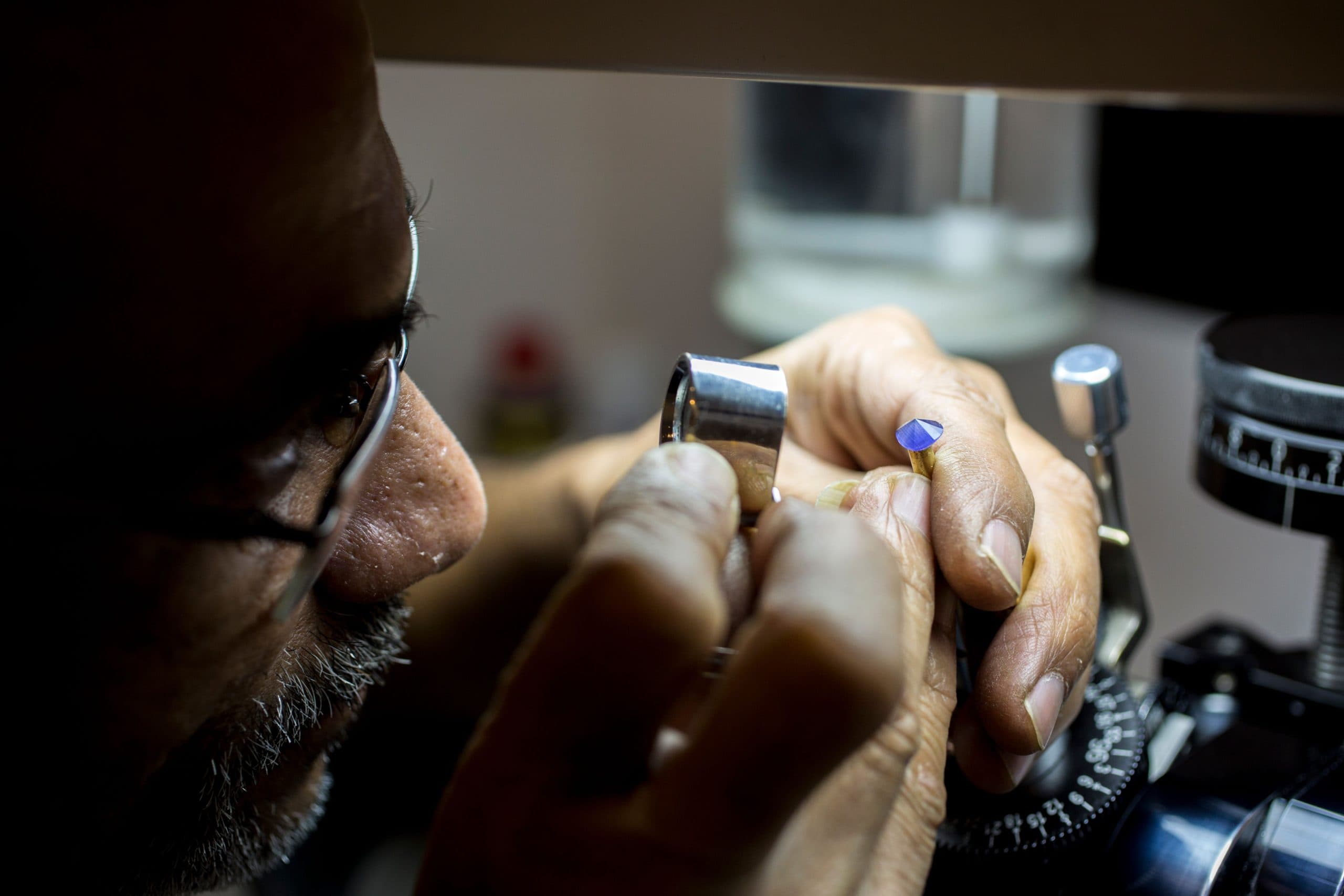
The tools are also quite specialised. A gemologist may work with a microscope, loupe, refractometer, polarising filters, spectroscope and other testing equipment. But owning the equipment is not enough. The real skill comes from knowing what to look for and interpreting what the equipment is showing.
That is why patience and attention to detail matter so much. A tiny inclusion that a customer would never notice can sometimes tell a trained professional something important about a stone.
A good gemologist does not just look at a gemstone. They know what the gemstone is telling them.
Gemologist Career in India: Where Can You Work?
Gemology has more career options than the job title suggests. A person may start as a trainee or junior gemologist and later move into diamond grading, coloured gemstone identification, quality control, sourcing, appraisal or laboratory work. Others move towards jewellery retail, gemstone trading, exports, education or management.
India has several important jewellery and gemstone centres. Surat has a major diamond manufacturing ecosystem, while Jaipur is particularly well known for coloured gemstones. Mumbai, Delhi and Ahmedabad also have established jewellery businesses and related opportunities. Employment News lists gemstone dealers, gemologists, jewellery retailers, appraisers and laboratory professionals among the possible career paths in the field.
This is useful for students because “gemologist” does not have to be the final destination. Someone who develops both technical knowledge and commercial skills can eventually move closer to buying, sourcing, sales or management.
What Skills Do You Need?
The first skill is observation. Gemstones can have very small differences that are easy to miss without training. Patience is equally important because examination can be repetitive and decisions often need to be made carefully rather than quickly.
You also need an interest in learning the technical side of gemstones. Understanding colour, clarity, inclusions, treatments, synthetic stones and testing methods takes time. Employment News highlights qualities such as precision, concentration, observation and hand-eye coordination as important for gemologists.
Communication becomes important as you gain experience. A senior professional may need to explain a grading decision to a buyer, train a retail team or discuss gemstone quality with a supplier. So being technically strong is useful, but being able to explain technical information in simple language can make you much more valuable.
How Do You Become a Gemologist in India?
There is no single route. Students and working professionals can choose from certificate, diploma and professional programmes offered by gemology institutes. The right course depends on the type of work you want to pursue.
Before choosing a course, look at the practical exposure rather than focusing only on the certificate. Gemology is a hands-on profession. You need opportunities to examine actual stones and use professional equipment. IIG, for example, offers career-focused gemology programmes and highlights practical learning as part of professional preparation.
A useful starting point is to decide what interests you most. If you are fascinated by diamonds, look for strong diamond-grading training. If coloured gemstones interest you more, choose a course that gives you enough exposure to ruby, sapphire, emerald and other important stones.
After completing a course, an internship or entry-level role can make a big difference. Working with real stones every day develops judgement in a way that classroom learning alone cannot.
What About Salary and Career Growth?
Gemology salaries vary based on experience, location, specialisation and the type of company. A fresher will naturally start at a different level from someone with several years of grading or sourcing experience. Mintly’s career guide places entry-level gemologist salaries broadly around ₹15,000–₹25,000 per month, although actual offers can vary between employers and cities.
Career growth can come from specialising. Someone who becomes particularly good at diamond grading, coloured gemstones, valuation or sourcing can build expertise that is difficult to replace. Experience also opens opportunities outside the laboratory, especially for professionals who understand both gemstones and the commercial side of jewelry.
The industry itself is changing too. Lab-grown diamonds, synthetic gemstones and increasingly sophisticated treatments mean that gemologists have to keep updating their knowledge. Customers are also asking more questions about what they are buying. That makes reliable product knowledge increasingly important for jewelry businesses.
Is Gemology a Good Career Choice?
It can be a rewarding career if you genuinely enjoy gemstones and detailed work. It may not suit someone looking for a job where every day is completely different or where most of the work involves people rather than products.
But if you like jewellery, science, observation and careful decision-making, gemology offers a career path that combines all four.
The best way to find out is not to choose a course immediately. Speak to a working gemologist. Visit an institute. Look at current job descriptions. Pay attention to the actual work involved.
You may discover that you love the field. Or you may realise that your interest lies more in jewellery sales, design, sourcing or manufacturing.
The important thing is to explore the industry before deciding which part of it you want to build your career in.
Career Path
Gemology course → Internship / trainee role → Junior Gemologist → Specialist → Senior Gemologist → Sourcing / Appraisal / Laboratory / Retail / Management
For someone starting out, the certificate gets you closer to the industry. The experience of examining real stones is what helps you grow once you’re there.
Read more blogs here